Home Office Organization Ideas for Small Desks That Maximize Space
Working from a small desk doesn’t mean sacrificing productivity or style. Whether you’re tucked into a corner of your bedroom or carved out a nook in your living room, implementing smart home office organization ideas for small desks can transform your cramped workspace into an efficient, beautiful command center.
The secret lies in maximizing vertical space, choosing multi-functional accessories, and keeping only what you truly need within arm’s reach. With thoughtful organization strategies, even the tiniest desk can become a powerhouse of productivity while maintaining a clutter-free aesthetic that helps you focus on your work rather than the chaos around you.
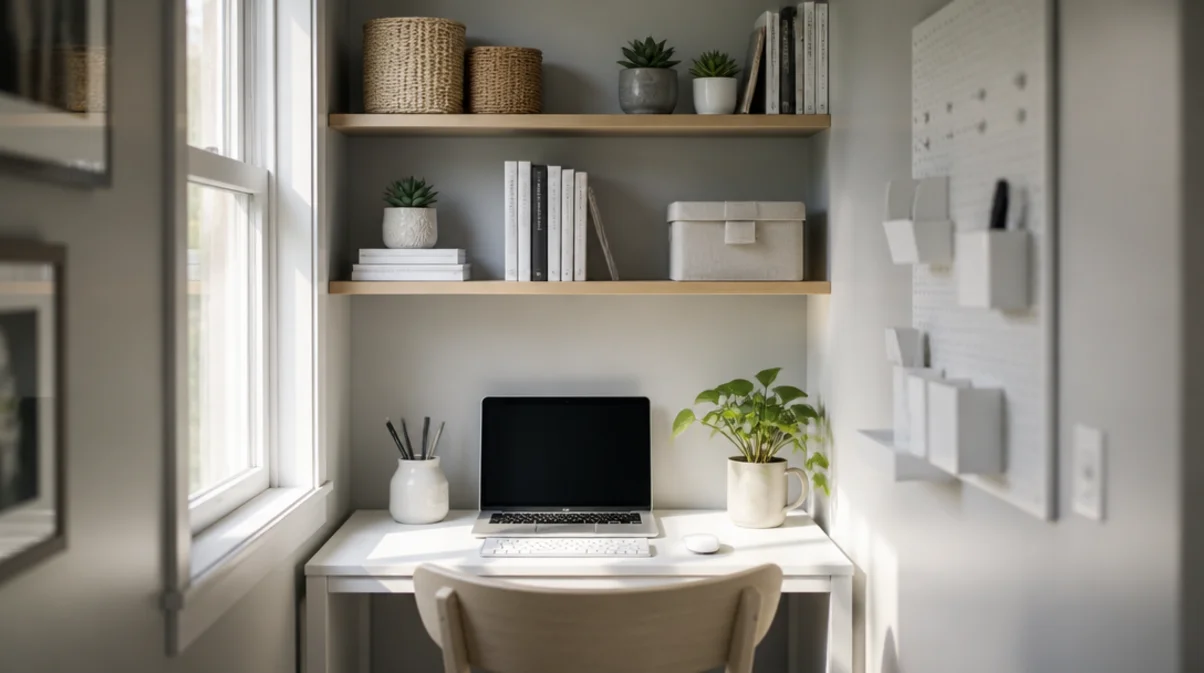
Vertical Storage Solutions That Free Up Surface Space
When desktop real estate is limited, the answer is simple: build upward. Wall-mounted shelves above your desk create valuable storage without consuming precious work surface. Install floating shelves in varying lengths to hold books, binders, and decorative storage boxes that keep supplies hidden but accessible. Pegboards offer incredible versatility, allowing you to hang baskets, hooks, and small shelves that can be rearranged as your needs change.
Consider a wall-mounted organizer system with pockets for pens, notepads, and charging cables. Magnetic boards can hold metal containers filled with paper clips, thumbtacks, and other small items that typically clutter drawers. By utilizing the vertical space around your small desk, you’ll keep essential items within reach while maintaining a clean, organized work surface that promotes focus and creativity.
Multi-Functional Desk Accessories That Work Harder
Investing in home office organization ideas for small desks means choosing accessories that serve multiple purposes. A monitor riser with built-in storage compartments elevates your screen to proper ergonomic height while creating space underneath for notebooks, a keyboard, or office supplies. Desk organizers with tiered compartments keep pens, sticky notes, and clips sorted vertically rather than spread across your workspace.
Look for file holders that can be mounted horizontally or vertically depending on your available space. A compact desk lamp with integrated USB ports and phone charging capabilities eliminates the need for multiple cords and adapters. Rolling carts positioned beside your desk provide additional storage that can be tucked away when not needed. These smart solutions maximize functionality without requiring additional square footage, proving that small spaces can be just as organized and efficient as larger home offices.
Drawer Dividers and Hidden Storage Techniques
What you can’t see can still cause stress, so organizing hidden spaces is just as important as visible surfaces. Drawer dividers transform chaotic junk drawers into orderly systems where everything has a designated spot. Use small containers, trays, or custom-cut foam board to create compartments for different categories: writing instruments, charging cables, sticky notes, and paper clips.
Adhesive cable management clips attached underneath your desk keep cords tidy and prevent the tangled mess that accumulates below most workspaces. Consider a desk with built-in storage or add-on drawer units that slide underneath your work surface. Utilize the back of your desk by attaching small hooks or magnetic strips for headphones, keys, or frequently used tools. These hidden organization strategies ensure that even when drawers are opened or you look beneath your desk, you’ll find order rather than chaos, making it easier to locate items quickly and maintain your organizational system long-term.

Minimalist Desktop Arrangement Strategies
The key to implementing effective home office organization ideas for small desks is ruthless editing of what actually stays on your work surface. Adopt a minimalist approach by keeping only daily essentials within reach: your computer, one pen holder with your three most-used writing instruments, and perhaps a small plant or inspirational object.
Everything else should have a home in drawers, on shelves, or in desktop organizers. Create dedicated zones for specific tasks—a writing area, a computer work zone, and a reference materials section—even within your limited space. Use a desktop filing system with just three folders: action items, reference materials, and archive. Implement a daily desk-clearing routine where you put everything away before ending your workday, starting fresh each morning. This disciplined approach prevents clutter accumulation and ensures your small desk never feels overwhelming, maintaining both visual calm and functional efficiency throughout your workweek.
Smart Cable Management for Clean Aesthetics
Nothing makes a small desk look more chaotic than tangled cords snaking across surfaces and dangling behind furniture. Proper cable management is essential for both aesthetics and functionality. Start by using cable clips or adhesive hooks mounted underneath your desk to route power cords, charging cables, and peripheral wires along the desk’s underside and legs.
Bundle multiple cords together with velcro ties or cable sleeves to create one streamlined pathway rather than several individual strands. A surge protector with mounting brackets can be attached directly underneath your work surface, keeping power sources accessible but hidden from view. Label each cable near the plug using small tags or colored tape so you can quickly identify which cord belongs to which device when troubleshooting.
Consider wireless alternatives wherever possible—Bluetooth keyboards, mice, and headphones eliminate cables entirely. These cable management techniques create visual calm and prevent the frustration of searching through cord tangles when you need to connect or disconnect devices from your organized small desk workspace.
Seasonal Rotation and Regular Decluttering Habits
Maintaining home office organization ideas for small desks requires ongoing attention rather than one-time organizing efforts. Implement a seasonal rotation system where you assess what’s currently on and around your desk every three months. Archive completed project materials, donate unused supplies, and refresh your organizational systems as your work needs evolve.
Adopt the one-in-one-out rule: when adding a new item to your desk area, remove something else to prevent accumulation. Schedule a five-minute desk reset at the end of each workday, returning items to their designated homes and wiping down surfaces. Once monthly, conduct a deeper organization session where you empty drawers, reassess what you’re actually using, and recommit to your systems. Keep a donation box nearby for supplies you no longer need so they can quickly exit your space.
These regular maintenance habits prevent the gradual creep of clutter that can overwhelm small workspaces, ensuring your desk remains functional, beautiful, and conducive to productive work throughout the year.

Transform Your Small Desk Into a Productivity Powerhouse
Creating an organized, efficient workspace in a small area isn’t just possible—it’s an opportunity to thoughtfully curate your work environment. By implementing these home office organization ideas for small desks, you’ll discover that limitations can inspire creativity and intentionality in how you design your workspace.
The vertical storage solutions, multi-functional accessories, hidden organization techniques, minimalist arrangements, cable management strategies, and maintenance habits we’ve explored work together to transform even the most compact desk into a productive, stress-free zone. Remember that organization is personal; adapt these ideas to fit your specific work style and aesthetic preferences. Start with one strategy today, perhaps installing floating shelves or implementing drawer dividers, and gradually build your perfect organized system.
Ready to reclaim your workspace?
Browse our collection of practical storage solutions and start creating the organized, beautiful home office you deserve, proving that great things truly do come in small packages.


4 Comments