How to Organize Kitchen Cabinets Step by Step: A Brilliant Guide for a Clutter-Free Kitchen
If you’ve ever spent fifteen minutes searching for that one spice jar or struggled to find matching food storage containers, you’re not alone. Kitchen cabinet chaos is a universal challenge that affects how we cook, clean, and enjoy our homes. Learning how to organize kitchen cabinets step by step transforms not just your storage spaces but your entire cooking experience.
The good news? You don’t need expensive organizing systems or a complete kitchen renovation to achieve beautifully organized cabinets. With a strategic approach and some dedicated time, you can create a kitchen that functions smoothly and looks magazine-worthy. This comprehensive guide walks you through every stage of the cabinet organization process, from the initial purge to the final placement of every item.
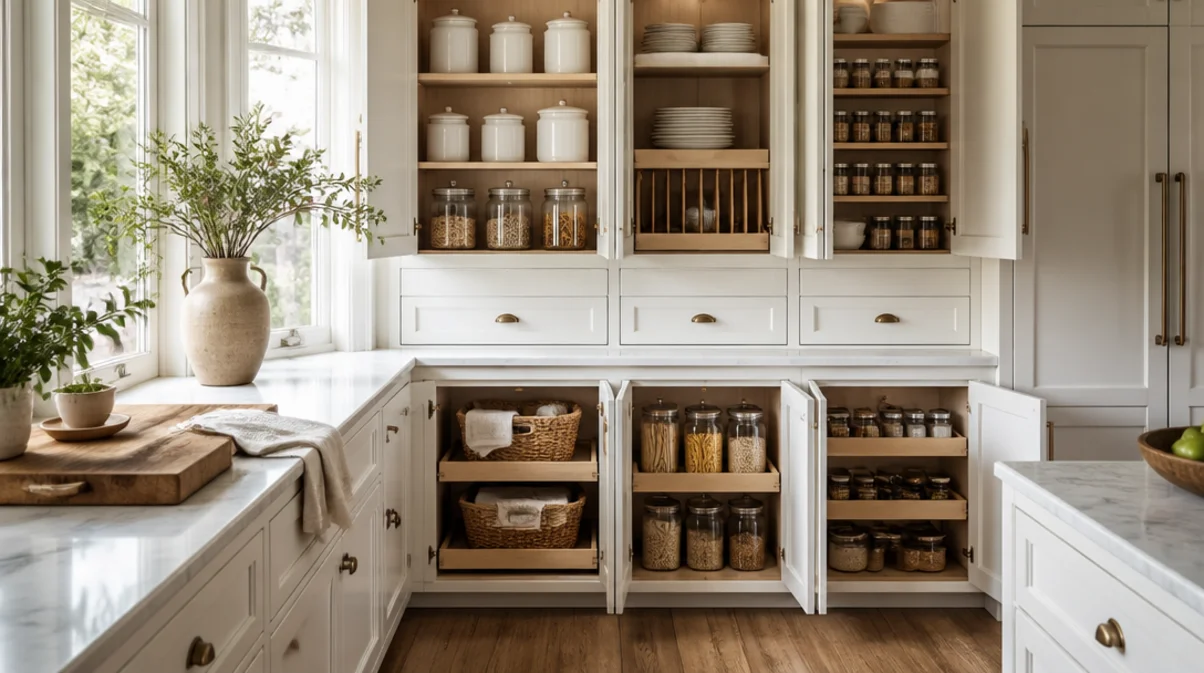
Step One: Empty Every Cabinet Completely
The foundation of learning how to organize kitchen cabinets step by step begins with a clean slate. Set aside a few hours and remove absolutely everything from your cabinets, placing items on your counters, kitchen table, or even the floor if needed. This might feel overwhelming at first, but seeing everything you own laid out is essential for making smart organizing decisions.
As you empty each cabinet, wipe down the shelves with warm soapy water or your preferred cleaning solution, paying attention to corners where crumbs and dust accumulate. Check for shelf liner damage and replace it if necessary, or consider adding new liner for extra protection. This fresh start gives you the opportunity to truly assess what you have and what you actually need in your kitchen daily.
Step Two: Sort and Declutter Ruthlessly
Now comes the therapeutic part of how to organize kitchen cabinets step by step: the great purge. Create four distinct piles: keep, donate, trash, and relocate to another room. Be honest about what you actually use versus what’s taking up valuable real estate.
That bread maker you received three years ago but never used? It’s okay to let it go.
Expired spices, chipped dishes, mismatched food storage containers without lids, duplicate utensils, and gadgets you forgot you owned should all find new homes. kitchen decluttering tips can help you make these tough decisions. Consider the six-month rule: if you haven’t used something in half a year, you probably don’t need it in prime kitchen cabinet space. This decluttering step typically eliminates thirty to fifty percent of cabinet contents, instantly creating more breathing room for what truly matters.
Step Three: Group Similar Items Together
Organization magic happens when you create logical categories for your kitchen items. Group all your baking supplies together, including measuring cups, mixing bowls, baking sheets, and specialty ingredients. Collect all food storage containers and match them with their corresponding lids, recycling any orphaned pieces. Gather coffee and tea supplies in one area, including mugs, filters, and sweeteners.
Create a breakfast zone with cereals, oatmeal, and morning essentials. According to professional organizers at HGTV, this zoning strategy reduces search time and makes cooking more intuitive. Stack plates by size, nest bowls efficiently, and arrange glasses by type. This categorization step reveals exactly how much space each group requires and helps you assign the perfect cabinet location for every category based on your daily cooking patterns.

Step Four: Assign Cabinets Based on Function
Strategic placement is crucial when you learn how to organize kitchen cabinets step by step. Store items where you actually use them, creating an efficient workflow. Keep everyday dishes in cabinets nearest to your dishwasher for quick unloading. Position glasses and mugs near the refrigerator or coffee maker for convenient beverage prep. Place pots, pans, and cooking utensils adjacent to the stove for easy access while cooking.
kitchen workflow organization maximizes efficiency during meal preparation. Store food items in cabinets away from heat sources to maintain freshness. Consider vertical space: heavy items belong on lower shelves while lighter, less-frequently-used items can occupy upper cabinets. Child-safe items and daily snacks should be accessible in lower cabinets, while special occasion serving pieces can claim higher real estate. This thoughtful assignment transforms your kitchen into a well-oiled machine where everything has a purpose-driven home.
Step Five: Invest in Smart Storage Solutions
Now that you understand how to organize kitchen cabinets step by step, enhance your system with budget-friendly storage helpers. Shelf risers double your vertical space and prevent stacking dishes too high. Lazy Susans revolutionize corner cabinets and deep shelves, making every item accessible with a simple spin. Clear stackable bins corral snack packages, baking supplies, and small items that otherwise scatter.
Tension rods installed vertically create dividers for baking sheets, cutting boards, and pan lids. Under-shelf baskets utilize wasted space beneath shelves for mugs or small containers. Drawer dividers keep utensils, measuring spoons, and kitchen tools from becoming jumbled messes.
affordable kitchen storage solutions prove you don’t need to spend a fortune to achieve professional results. Label makers or simple tags help family members maintain your new system, ensuring everyone knows exactly where items belong.
Step Six: Maintain Your Organized Cabinets
The final step in how to organize kitchen cabinets step by step focuses on sustainability. Implement a simple maintenance routine to prevent reverting to chaos. Adopt the one-in-one-out rule: when you acquire a new kitchen item, donate or discard something similar.
Schedule a quick fifteen-minute cabinet reset weekly, returning wayward items to their designated homes and wiping spills immediately. Conduct a seasonal deep assessment every three months, checking for expired foods, unused items, and organizational systems that need adjustment. Encourage family members to respect the new organization by clearly communicating where things belong.
Keep a donation box in your pantry or garage for items you realize you no longer need, making decluttering effortless and ongoing. Taking photos of your beautifully organized cabinets serves as motivation and a reference guide when things drift slightly out of place.

Congratulations! You now know exactly how to organize kitchen cabinets step by step and have the tools to transform your kitchen into an organized, functional space that brings joy rather than frustration. Remember, the perfect organization system is one that works for your unique cooking style, family needs, and daily routines.
Don’t be afraid to adjust and refine your cabinet organization as you discover what truly serves you best. The investment of time you make today pays dividends every single day when you can quickly find what you need and enjoy cooking in a clutter-free environment. Your kitchen should inspire creativity and nourish your family, not cause stress.
Ready to tackle another area of your home?
Start your cabinet organization project this weekend and experience the peace that comes with a truly organized kitchen. Share your before-and-after photos with us and inspire others to create their dream kitchen space!


3 Comments