How to Arrange Furniture in a Small Living Room: 12 Space-Saving Layouts That Work
Learning how to arrange furniture in a small living room can feel like solving a challenging puzzle, but it doesn’t have to be overwhelming. Whether you’re working with a cozy apartment or a compact family room, the right furniture arrangement can transform your space from cramped to comfortable.
The secret lies in understanding how to maximize every square foot while maintaining style and functionality. With smart placement strategies and a few clever design tricks, your small living room can become the inviting gathering space you’ve always wanted. Let’s explore practical solutions that won’t require a complete furniture overhaul or stretch your budget, just thoughtful rearrangement and strategic choices that make your room feel twice its actual size.
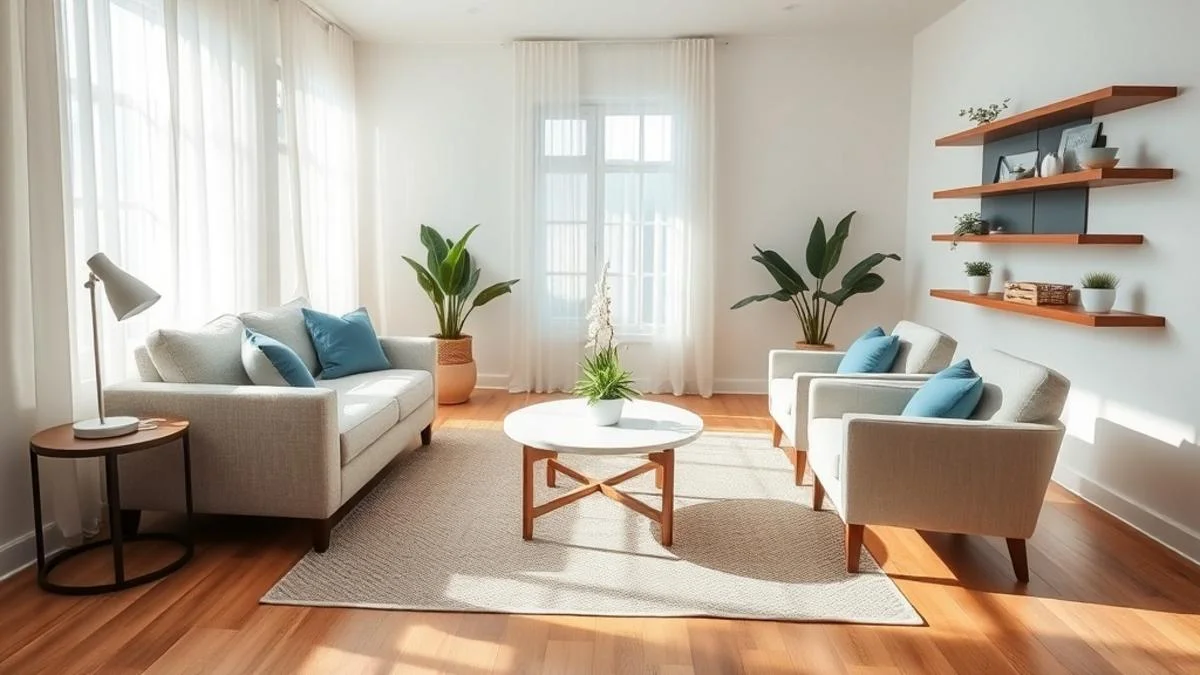
Start With Your Focal Point When Planning How to Arrange Furniture in a Small Living Room
Every successful furniture arrangement begins with identifying your room’s natural focal point. This might be a fireplace, a large window with a beautiful view, or your entertainment center. Once you’ve determined this anchor, arrange your seating to face or complement it rather than compete with it. In small spaces, working with your focal point rather than against it creates visual harmony and prevents the room from feeling chaotic.
Position your largest piece, typically the sofa, to face this feature at a slight angle if space allows, which creates better flow than pushing everything flat against walls. According to Better Homes & Gardens, embracing your focal point helps establish the room’s purpose and guides all other furniture decisions. This approach ensures your small living room feels intentional rather than haphazard, making the space appear more organized and therefore larger.
Create Conversation Areas Without Blocking Traffic Flow
Understanding how to arrange furniture in a small living room means balancing intimacy with accessibility. Create a cozy conversation area by positioning seating pieces within eight feet of each other, which allows comfortable dialogue without shouting. However, maintain clear pathways of at least 30 inches for easy movement through the room.
Consider floating your sofa away from the wall by just 12-18 inches to create depth and dimension, a counterintuitive trick that actually makes small rooms feel larger. Use lightweight chairs that can be easily moved when needed, and skip the bulky recliner in favor of a sleek armchair with a small ottoman.
small living room layout ideas can provide additional inspiration for traffic-friendly arrangements. Remember that negative space is your friend in compact rooms, so resist the urge to fill every corner with furniture. Strategic emptiness creates breathing room and prevents your living area from feeling like an overcrowded furniture showroom.
Choose Furniture Scaled Appropriately for Small Spaces
Furniture size matters tremendously when working with limited square footage. A standard 90-inch sofa might overwhelm a small living room, while a 72-inch loveseat or apartment-sized sofa creates better proportion and leaves room for additional seating.
Look for pieces with exposed legs rather than skirted bases, as visible floor space creates an airier feeling. Armless chairs and settees take up less visual weight while still providing comfortable seating. Consider multifunctional furniture like ottomans with hidden storage or nesting tables that tuck away when not needed.
Glass or acrylic coffee tables virtually disappear, making them perfect for tight quarters. According to Houzz, selecting furniture that’s properly scaled prevents your room from feeling like a dollhouse or a furniture warehouse. Measure your space carefully before purchasing anything new, and don’t be afraid to use painter’s tape on the floor to map out furniture footprints before committing to an arrangement.

Utilize Vertical Space and Multi-Level Design Elements
When floor space is limited, look upward to maximize your small living room’s potential. Tall bookcases draw the eye up and provide storage without consuming precious square footage. Mount your television on the wall or place it on a narrow console to free up floor space.
Floating shelves display decorative items while keeping surfaces clear below. Choose floor lamps over table lamps when possible, as they provide lighting without requiring end table real estate. Hang curtains as close to the ceiling as possible to create the illusion of taller walls and grander proportions.
Vertical storage solutions like wall-mounted cabinets or hanging planters add functionality without crowding your walking areas. small living room storage ideas offers more creative solutions for vertical organization. This upward approach to arranging furniture in a small living room helps maintain open floor space while still accommodating all your living room necessities, making the room feel less cluttered and more breathable.
Embrace Flexible and Modular Furniture Arrangements
Flexibility is key when figuring out how to arrange furniture in a small living room that serves multiple purposes. Modular sectionals can be reconfigured based on your needs, breaking apart for casual everyday use or coming together for movie nights. Lightweight poufs and stools provide extra seating that stores under console tables or in corners when not needed.
Consider a sofa table behind your couch that serves as a workspace or dining area in studio apartments. Rolling carts function as bar carts during parties and storage for books or blankets on regular days. Folding chairs that hang on walls or tuck into closets offer guest seating without permanent space commitment. multi-functional living room furniture provides excellent options for adaptive pieces.
This flexible approach means your furniture arrangement can evolve with your needs throughout the day, transforming from a quiet reading nook to an entertainment hub to a dining area without requiring a complete redesign each time.
Apply Visual Tricks That Make Rooms Feel More Spacious
Strategic furniture arrangement goes hand-in-hand with visual design choices that amplify your space. Use mirrors opposite windows to reflect natural light and create the illusion of depth. Choose furniture in light or neutral colors that recede visually rather than heavy dark pieces that anchor the eye. Maintain a consistent color palette throughout your furniture and decor to create visual continuity.
Keep window treatments simple and light-filtering rather than heavy drapes that shrink the room. Position a large piece of artwork on one wall to create a focal point that draws attention away from the room’s compact dimensions. Area rugs should be large enough to anchor your furniture grouping, with front legs of seating pieces resting on the rug to define the conversation area.
Avoid busy patterns on large furniture pieces, saving bold designs for smaller accent items. These visual strategies work in tandem with smart furniture placement to make your small living room feel significantly more spacious and inviting than its actual measurements suggest.

Conclusion: Transform Your Compact Space Into a Functional Haven
Mastering how to arrange furniture in a small living room doesn’t require expensive renovations or a complete furniture replacement. By starting with your focal point, creating thoughtful conversation areas with clear pathways, choosing appropriately scaled pieces, utilizing vertical space, embracing flexibility, and applying visual expansion tricks, you can transform even the tiniest living room into a welcoming, functional space.
Remember that small doesn’t mean sacrificing style or comfort. Sometimes the most charming living spaces are the cozy ones that encourage togetherness and intentional design. Experiment with different arrangements using these principles as your guide, and don’t be afraid to break conventional rules if something works better for your lifestyle.
Your small living room has enormous potential waiting to be unlocked with just a few thoughtful changes. Ready to reimagine your space? Start by measuring your room, identifying your focal point, and sketching a few layout options. Your dream living room arrangement is closer than you think, and it won’t cost a fortune to achieve it.


3 Comments